One Paw Up, No Promises: What the Lucky Cat Really Says About Casino Luck
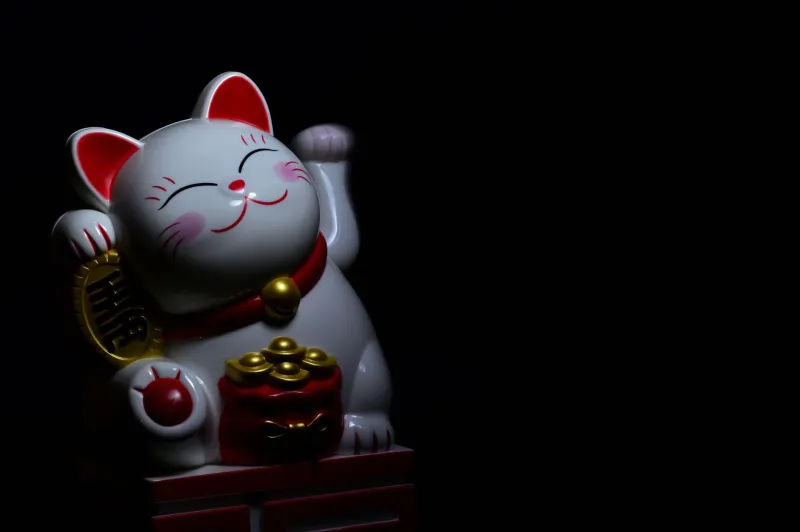
Ask a UK slot player to picture luck and you will probably get one of two images: a rainbow over a bingo hall, or a ceramic cat with one paw in the air. The maneki-neko — literally 'beckoning cat' — has escaped Japan and landed everywhere from sushi counters in Soho to the front desk of a Manchester nail bar. It is charming, slightly mysterious, and permanently mid-wave. It is also not a betting system.
The cat that supposedly saved a samurai
The best-known maneki-neko legend is an Edo-period tale about a samurai sheltering under a tree during a storm. A cat appears and beckons him towards a temple. He follows, the tree is struck by lightning, and the cat has apparently saved his life. Versions differ — sometimes the cat belongs to a temple priest, sometimes the samurai becomes a patron of the temple — but the shape of the story is always the same: the paw waves, the human moves, disaster misses.
Gotokuji Temple in Tokyo is often linked to the tale and is famous for its thousands of lucky cats. Whether you treat that as history, folklore, or a very good excuse to buy a tiny ceramic cat is up to you. What matters for our purposes is that the maneki-neko began as a story about hospitality, protection and a bit of good timing. It did not begin as a promise that your next spin would land a bonus round.
Colours, coins and quiet meanings
Part of the cat's appeal is that it is a little puzzle box of symbols. White is often read as general good fortune. Gold leans towards money and business. Black is traditionally associated with warding off bad spirits. Red can signal health, pink is sometimes tied to romance, and the classic calico is a general all-rounder. The coin the cat often holds is a koban, a historic Japanese gold piece. None of this is a secret code for return-to-player percentages.
That is the fun of it. A lucky cat is a visual wink, a bit of theatre, a small daily ritual. It sits on a shelf and says 'good things might happen'. It does not say 'the machine is due'.
Luck versus the random number generator
Here is where the folklore meets the maths. Online slots run on random number generators. Each spin is independent of the last one. A cold streak does not make a hot streak more likely, and a cat cannot warm up the reels by staring at them. The house edge is built into the game design, and RTP is a long-run average rather than a promise for your session. Variance means some sessions swing more than others; that is normal, not personal.
In the UK, licensed operators must follow Gambling Commission rules and offer tools such as deposit limits and time reminders. That is the practical side of luck: the bit you can actually control. Superstition is harmless when it is a bit of fun. It becomes expensive when it turns into chasing a loss because the cat 'looks due'.
What the paw can actually teach you
A lucky charm is best used as a reminder to play deliberately. Before you open a lobby, decide on an entertainment budget you are happy to spend and a per-session cap that keeps things comfortable. Set a deposit limit. Use time alerts. Plan your stakes so that a normal losing run does not push you into a grim 'one more spin' spiral. If you have had a few drinks, or you are playing to fix a bad day, the cat is not the problem — but the timing is.
Think of the raised paw as a pause button rather than a green light. It waves, you breathe, you check your budget, and then you decide. That is a much better ritual than tapping the screen because a ceramic ornament looked at you funny.
The Maneki view
Lucky paws, proper guides, safe play. We like folklore. We like slots. We do not confuse the two. The maneki-neko is a lovely bit of culture and a great mascot for a site that wants to keep things playful, but the real magic is in clear limits, sensible stakes and knowing when to stop. If the cat brings you joy, brilliant. If it starts making decisions for you, put it back on the shelf.