The Timetable Is the Safety Net: Fixing Your Way Home Before a UK Casino Night
Most casino advice starts at the door. This one starts at the ticket machine.
Japan’s Shinkansen are famous for many things, but the useful bit for a UK casino night is not the speed. It is the expectation that the train leaves when it says it will, from the platform it says it will, and that passengers have already worked out how they are getting home. The journey is not an afterthought. It is part of the plan.
That is the Shinkansen rule in simple terms: buy the return ticket before you enter the casino. Not because spontaneity is the enemy, and not because every session needs a clipboard and a stopwatch. Because an open-ended night is much easier to drift through than a night with a last train, a taxi fund and a meeting point attached to it.
At Maneki Casino, the lucky cat is a mascot, not a guarantee. Good play tends to come from good preparation, and preparation can look pleasantly boring: a screenshot of a train time, a charged phone, a note of the taxi rank, a friend who knows where to find you.
Why a Return Ticket Changes the Shape of the Evening
A pre-booked ticket is a gentle commitment device. It does not lock you in, and it does not stop you changing plans. It simply makes the default option the one you chose while you were calm, sober and thinking clearly.
That matters in a UK casino because the end of a session is where judgement gets slippery. The last train has gone. The taxi app is showing surge pricing. Someone suggests one more hand. The difference between a planned exit and a vague intention is often just a ticket in your inbox and an alarm with a label on it.
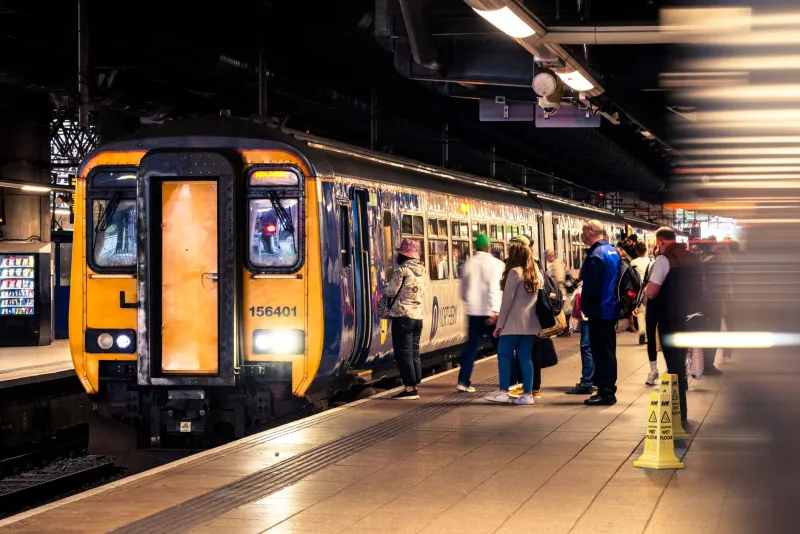
There is also a practical UK angle. Rail engineering works can turn a simple journey into a replacement bus. Night Tube services cover some lines, not all of them. Taxi availability after midnight varies by city, and a rank that looks quiet at 8pm can be a different story at 1am. Knowing your route home is not fussiness. It is basic travel literacy.
The Four Things to Fix Before You Go
You do not need a full itinerary. You need four decisions made in advance.
1. The train times. Check the last sensible service, not just the last service. A train that gets you home at 2am with a 25-minute walk may be technically possible and practically miserable. Book a return if you can, and screenshot the journey. Signal in a basement casino floor is not guaranteed.
2. The taxi budget. Decide what a taxi home would cost and set that money aside separately. Think of it as a travel line in the budget, not a spare gambling stake. If the taxi fund is gone, the train is the route. If the train is gone, the taxi fund is there for exactly this reason.
3. The phone charge. A phone at 12% is not a plan. Charge it before you leave, carry a small power bank if you rely on mobile tickets, and keep offline copies of your booking. A dead phone turns a simple exit into a small negotiation with strangers and staff.
4. The departure point. Pick a physical place and a time. Not “when I feel like it” and not “after this game”. A station entrance, a taxi rank, the clock in the concourse, the front of a nearby café. Tell the person you are with. Set an alarm with a name you will actually read: last train, leave now, taxi money only.
Make the Departure Point Physical, Not Philosophical
“I will leave if I am up” is not a departure point. “I will leave from the station entrance at 23:10” is. The second version can be checked. The first version can be argued with.
A no-negotiation departure point works because it removes a decision from the most tired version of you. You are not deciding whether to leave. You are deciding whether to walk to a place you already named. That is a much smaller ask.
It also helps to tell someone else. A friend, a flatmate, a partner, a group chat. Nothing dramatic. A simple message before you go in: I am getting the 23:40 from the station, taxi fund is separate, I will message when I am on board. That is not a restriction. It is the same sort of courtesy you would extend on any night out.
Budget the Taxi Like a Travel Cost
One of the easiest ways to blur a casino budget is to treat the journey home as an emergency expense. It is not an emergency if you planned for it. Put a taxi figure aside before you enter, in a separate pocket, envelope or banking app pot if that helps.
The size of the fund is up to you and your city. The principle is what matters: the return journey is part of the night’s cost, not a penalty for staying late. If you would rather take the train, great. Keep the taxi fund for the night when the trains are disrupted, the weather turns, or you simply should not be walking to a platform alone.
This is also where the Shinkansen mindset is handy. Japanese rail travel is built around the idea that the journey is part of the experience, not an inconvenience bolted on at the end. A UK casino night can borrow that. The walk to the station, the taxi queue, the train home — these are not the boring bits after the fun. They are the frame that holds the evening together.
A Small Platform Ritual
Before you go in, do a two-minute check. Ticket open or screenshot saved. Phone charged or power bank in pocket. Taxi fund separated. Departure point agreed. Alarm set. Then close the app and go and enjoy yourself.
At the end of the night, do not renegotiate the whole plan because the mood has changed. Check the time, check the route, and move towards the exit you already chose. If you genuinely want to change the plan, change it consciously — with a new train time, a new taxi budget and a new departure point — rather than letting the evening drift into an expensive improvisation.
The lucky cat does not promise a win. It promises a bit of charm and a paw in the right direction. A return ticket is the same sort of charm: not magic, just a small useful object that makes the sensible choice easier to take. Buy the journey home before you enter. Then let the evening be the evening.